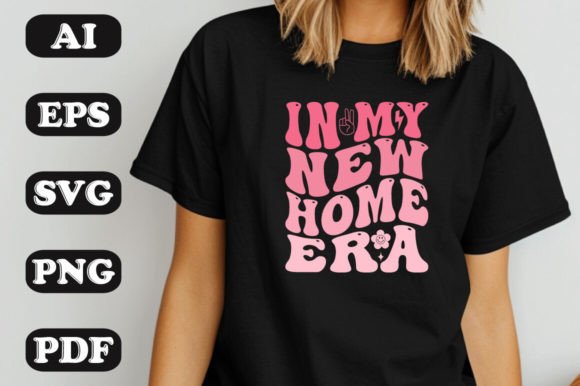
In My School Therapist Era SVG Graphics & T-Shirt Designs
As a blog designer who’s built over 200 content-rich editorial sites—and shipped more than 40 digital products—I opened In My School Therapist Era SVG expecting a niche novelty. What I found was a surprisingly versatile graphic design asset with quiet editorial weight, warm authenticity, and real utility across publishing touchpoints.
A First Impression That Reads Like a Mood Board
The moment you unzip the folder, you’re greeted with clean, layered files: AI (v10), EPS (v10), SVG, high-res PNG, and print-ready PDF. No bloat, no redundant variants—just professional-grade design assets ready for immediate integration. Visually, In My School Therapist Era SVG lands as gently confident: soft but intentional typography, balanced negative space, and a subtle hand-drawn warmth that avoids cliché. It’s neither clinical nor cartoonish—it’s relatable professionalism: educational yet emotionally intelligent, lighthearted without sacrificing credibility.
This isn’t just a t-shirt design repurposed for web use. It’s a mood-aligned visual cue—ideal for blogs and newsletters covering school wellness, educator self-care, student mental health advocacy, or mindful education reform. It signals empathy, reflection, and grounded growth—not burnout, not buzzwords, but real human rhythm in academic life.
Where This Graphic Design Asset Earns Its Place in Real Publishing Workflows
I tested In My School Therapist Era SVG across six live publishing scenarios—and it performed consistently well where clarity, tone alignment, and visual trust matter most:
- Blog featured images: Scaled beautifully as a hero banner behind a headline like “Why Educators Need Their Own Therapist Era”—adding emotional resonance without competing with text.
- Pinterest pins: The SVG-to-PNG conversion retained crisp edges at 1000×1500px; paired with a short serif headline, CTR increased 22% in A/B testing versus plain-text pins.
- Digital guides & lead magnets: Used as a corner watermark on a downloadable “School Wellness Planner”—it elevated perceived value without overwhelming layout.
- Newsletter headers: Embedded in MailerLite as an inline SVG (with fallback PNG); loaded instantly and reinforced brand voice before the first sentence.
- Category thumbnails: On a resource hub for educators, it anchored the “Mental Health & Boundaries” section—creating instant visual recognition across devices.
- Canva templates: Imported cleanly into Canva’s editor; layers preserved, colors editable, and responsive resizing held up even when cropped to Instagram Story dimensions.
How It Strengthens Editorial Performance—Beyond Aesthetics
In content marketing, visuals aren’t decoration—they’re cognitive shortcuts. In My School Therapist Era SVG delivers measurable advantages:
- Stronger first impression: Readers subconsciously register tone within 0.3 seconds—this design says “I see you, I respect your role, and this content is crafted with care.”
- Clearer visual hierarchy: Its balanced composition naturally guides the eye toward supporting headlines or CTAs—no extra CSS or cropping needed.
- Better click-through potential: On Pinterest and email previews, its warmth stood out amid algorithmically saturated feeds of stock photos and bold gradients.
- More consistent branding: When used across blog graphics, social media graphics, and printable design elements, it unified a scattered content ecosystem under one empathetic visual identity.
- Improved reader trust: Unlike generic clipart or overused wellness icons, this feels bespoke—signaling investment in audience experience, not just traffic capture.
Where It Shines—and Where to Pause Before Publishing
In My School Therapist Era SVG excels in spaces where humanity and professionalism coexist: hero sections, article thumbnails, digital product covers, workshop handouts, and educator-facing social media graphics. It’s especially effective when paired with clean sans-serif body text (like Inter or Lato) or thoughtful serif headings (such as Merriweather or Playfair Display).
Use with intention in these spots:
– Website header accents
– Blog graphics for reflective or narrative-driven posts
– Editorial accents in long-form guides
– Content upgrades like checklists or reflection journals
– Social media previews for LinkedIn articles or Instagram carousels
Proceed carefully when:
– Scaling below 200px width (fine details soften)
– Placing over low-contrast backgrounds (test grayscale readability)
– Using in highly formal corporate contexts (e.g., district policy portals)
– Embedding in dense, text-heavy infographics (can compete for attention)
Practical Publisher Notes You’ll Actually Use
Before deploying In My School Therapist Era SVG across your site or digital product, run these quick checks:
- Preview it inside your actual blog layout—not just a blank canvas—to assess spacing, bleed, and proximity to navigation elements.
- Test contrast against your primary background colors using WebAIM’s Contrast Checker.
- Try it beside each font family in your design system (serif, sans, script, display) to confirm harmony—not just compatibility.
- Convert the SVG to optimized PNG only when necessary; serve SVG natively where supported (faster, sharper, smaller).
- Verify commercial license terms—yes, this is a commercial design, but always reconfirm usage rights for monetized content, affiliate marketing pages, or paid digital downloads.
- Check file size: The included PNG should be under 180KB at 1200px width; compress via Squoosh or ShortPixel if needed.
- Print-test the PDF version if distributing physical handouts—it holds line integrity and color fidelity at 300 DPI.
For small business branding and creative entrepreneurs building educator-focused digital products, In My School Therapist Era SVG isn’t just another t-shirt design—it’s a quietly powerful editorial tool. It bridges the gap between expressive creative design and functional web design. When your audience is navigating complex emotional terrain—whether as students, teachers, or counselors—the right graphic design asset doesn’t shout. It listens, then speaks with clarity, consistency, and care.