Eat Sleep Gym Repeat T-shirt Design
A Designer’s First Look: Clean, Confident, and Built for Wear
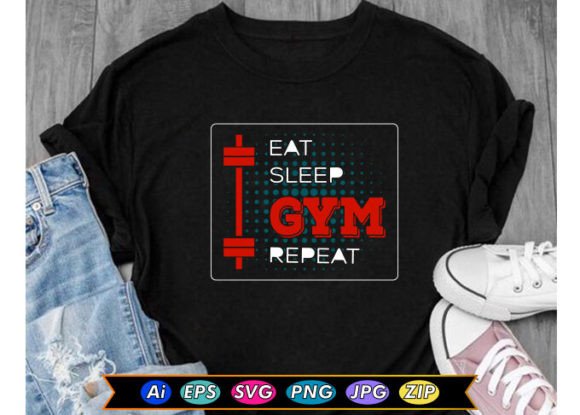
When I opened the Eat Sleep Gym Repeat T-shirt Design, my first thought wasn’t “cute” or “trendy”—it was “this will stitch cleanly.” The layout is balanced, with strong horizontal rhythm and generous letter spacing. There’s no excessive ornamentation—no swirls, no shadow effects, no tiny serifs that’ll vanish under thread. Just bold, legible, evenly weighted text that reads instantly at a glance. It feels athletic without being aggressive, playful without leaning into meme culture. That matters—because this isn’t just a graphic; it’s a machine embroidery design waiting to live on real fabric.
Real-World Test: Embroidering It onto a Heavyweight Cotton Tote
Last week, I used the Eat Sleep Gym Repeat T-shirt Design as the centerpiece for a custom embroidered tote bag—intended as a small-batch boutique item for a local fitness studio’s holiday pop-up. I chose a 6-inch hoop, medium-weight cotton canvas, and a tear-away + cut-away stabilizer combo. The result? Crisp satin-stitched letters with consistent density and no puckering. The “Gym” stands out just enough—not shouting, but holding its own against the bag’s texture. Customers paused mid-aisle to read it aloud. That’s the sign of a working design: it invites interaction, not just observation.
Where It Shines—and Where to Pause
This design excels in applications where clarity and durability matter most:
- Custom apparel (especially crewnecks, sweatshirts, and structured tees)
- Embroidered patches — clean edges mean sharp heat-applied or sewn-on results
- Tote bag design and apron embroidery — large-scale readability stays intact
- Holiday embroidery and personalized gifts — it’s upbeat but not juvenile, making it versatile for gym buddies, new moms doing postpartum strength work, or teens starting their first fitness journey
- Craft business and Etsy seller listings — the included Editable AI file, SVG File, and Transparent PNG let you tweak sizing or adapt for mockups without losing quality
But it’s not magic. On thin or highly stretchy fabrics—like lightweight jersey tees or baby onesies—I’d scale it down slightly and add extra stabilizer. Tiny lettering (under 0.25”) risks fill-stitch bleeding, so avoid shrinking it beyond 4 inches wide unless you’ve tested stitch density first. And on dark fabric? Always check contrast: the High Quality JPG file and Transparent PNG help preview how white or light thread will hold up—but nothing replaces stitching a sample.
What It Does for Your Brand—and Your Buyer
As a designer who’s reviewed hundreds of T-Shirt Designs, I notice how often “gym” graphics lean too hard into cliché—dumbbells, flexing arms, exaggerated fonts. This one avoids that trap. Its simplicity builds customer trust: it looks handmade, not mass-produced. When stitched well, it elevates a basic sweatshirt into a handmade product with intention. For an Etsy seller or small shop product, that translates directly to perceived value—and willingness to pay $2–$5 more per item. It also scales gracefully across formats: use the Editable EPS File for vector-based branding, the Transparent PNG for digital product previews, and the JPG file for quick social media banners.
Practical Notes Every Embroidery Designer Should Check
Before committing to a full run—whether for commercial embroidery, personalized gifts, or craft fair products—here’s what I always do with a new digital embroidery file:
- Test on scrap fabric first—same weight, same stretch, same dye lot if possible
- Review stitch density in your embroidery software; dense fills can stiffen lightweight items
- Confirm hoop size compatibility; this design fits comfortably in a 5x7 hoop, but verify before digitizing
- Inspect corners and curves—especially the “R” in “Repeat”—to ensure no running stitch gaps
- Try black-and-white mockups using the Transparent PNG to assess contrast on light/dark backgrounds
- Use proper stabilizer—this isn’t a low-density applique design, so skip lightweight tear-away alone
- Check licensing before selling finished items or reselling the embroidery file; the listing doesn’t specify terms, so clarify before scaling commercially
Final Thought: A Quiet Workhorse, Not a Flashy Gimmick
The Eat Sleep Gym Repeat T-shirt Design won’t win awards for novelty—but it’s exactly the kind of Graphics that builds repeat customers. It works on a pillow cover for a home gym, a kitchen towel for a wellness coach, or a cap embroidery project where curved surfaces demand forgiving proportions. It respects the craft: no hidden traps, no over-engineered details, no assumptions about your machine’s limits. As a designer, I appreciate that. As a small business owner, I rely on it. And as someone who’s handed dozens of these embroidered items to real people? I’ve never heard, “I can’t read that.” That’s the highest compliment an embroidery project can earn.