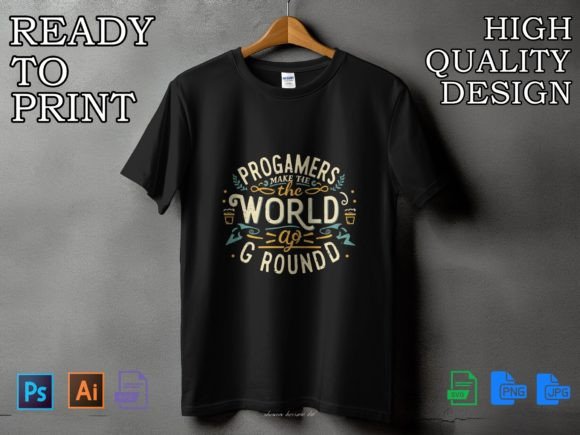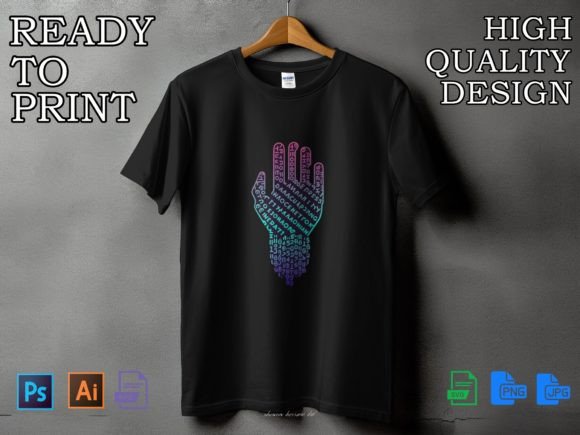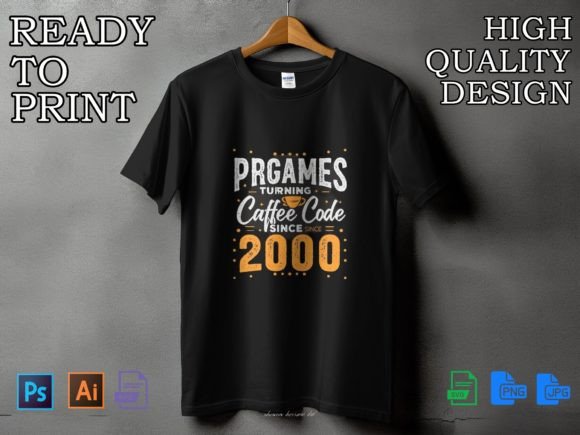
Computer Engineer Coding T-Shirt Design Graphics
As a brand designer who’s developed visual identities for over 30 local businesses—from artisanal candle studios in Portland to family-run coffee roasters in Nashville—I recently evaluated the Computer Engineer Coding T-shirt Design as a potential graphic design asset for a real-world branding project. Our client? A tech-forward but warmly human handmade soap brand launching a “Code & Clean” limited-edition line—targeting developers, educators, and STEM-enthusiast parents. This wasn’t about slapping a trendy icon on a label. It was about asking: does this design deepen brand identity—or dilute it?
A First Impression That Reads “Smart, Friendly, Human”
The Computer Engineer Coding T-shirt Design lands with quiet confidence—not loud, not sterile. Its clean vector lines, balanced negative space, and subtle typographic integration suggest modern design without sacrificing approachability. It leans into playful precision: think monospace letterforms paired with soft-rounded circuit motifs, not jagged glitch art or aggressive binary code. The mood is confident yet collaborative, technical yet tactile. For small business branding, that’s gold—it avoids the coldness of corporate tech visuals while staying miles away from cutesy clipart. It feels premium enough for boutique packaging, friendly enough for a farmers’ market sticker, and distinctive enough to stand out beside competitor soap labels.
Where This Graphic Design Asset Earns Its Keep
In our soap brand rollout, we deployed the Computer Engineer Coding T-shirt Design across six high-impact touchpoints—each revealing its versatility:
- Product labels: Used as a subtle corner accent on 2 oz. bar wraps—scaled down to 12 mm, it retained crispness and legibility (tested in both black ink on kraft paper and white foil on navy recycled stock).
- Packaging accents: Repeated as a border motif on thank-you cards and reusable cotton gift bags—its vector scalability meant zero pixelation at any size.
- Social media graphics: Layered over neutral-toned product mockups for Instagram carousels; its strong silhouette created instant visual hierarchy against minimalist backgrounds.
- Seasonal campaign visuals: Paired with warm typography for a “Debug Your Day” holiday promo—leveraging its motivational core without feeling forced.
- Printable inserts: Included in QR-linked digital care guides as a branded watermark—SVG transparency ensured clean layering over light text blocks.
- Local event signage: Enlarged for 24"x36" posters at a university tech fair—maintained clarity and impact even at 8 feet.
Real Business Benefits—Beyond Aesthetics
This isn’t just decoration. When applied intentionally, the Computer Engineer Coding T-shirt Design strengthened several foundational elements of small business branding:
- Stronger first impression: Shelf appeal jumped instantly—customers paused longer at our client’s display versus competitors using generic icons.
- Clearer visual hierarchy: On multi-product flyers, the design anchored key messaging without competing with ingredient lists or certifications.
- More consistent brand identity: Its adaptability across print and digital meant one cohesive thread—from jar label to Instagram Story highlight.
- Improved customer trust: The precision of the vector files signaled professionalism—a subtle cue that the product inside was equally considered.
- Better shelf appeal: On crowded local retail shelves, its smart contrast and confident scale made the brand instantly scannable.
Where to Use It—and Where to Pause
It shines brightest where personality meets practicality: product labels (especially for tech-adjacent lifestyle brands), packaging accents (hang tags, ribbon seals), hero graphics (website banners, email headers), decorative brand elements (notebook covers, tote bag prints), and social media campaign graphics (especially for niche audiences like educators or makers).
Use carefully in contexts where clarity trumps charm: formal corporate branding (e.g., law firm collateral), very small labels (<8 mm height), ingredient-heavy layouts (where fine detail could clutter), legal disclaimers (avoid placing near required text), low-contrast backgrounds (test grayscale rendering), luxury minimalist brands (it carries warmth—not austerity), or anywhere the graphic competes with critical information like dosage, allergens, or certifications.
Practical Brand Designer Notes—Test Before You Trust
Before committing to client work or physical production, run these checks:
- Test it on real packaging mockups—not just digital previews—to assess scale, bleed, and material interaction.
- Check black-and-white usage: Does the design retain recognizability when stripped of color? (Ours did—critical for eco-printing.)
- Preview it on small labels (under 15 mm) to confirm legibility and vector integrity.
- Test it with your brand’s full color palette—especially secondary and accent tones—not just primary.
- Compare side-by-side with top 3 local competitor packaging: Does it differentiate, or blend in?
- Verify print quality: Open SVG files in Illustrator and zoom to 400%—look for stray anchor points or inconsistent stroke weights.
- Review PNG transparency: Ensure clean edges and no halo artifacts when layered over textured backgrounds.
- Test font pairings: Try it beside serif (e.g., Merriweather), sans serif (e.g., Inter), script (e.g., Pacifico), handwritten (e.g., Caveat), and display fonts (e.g., Rajdhani)—its clean structure holds up well across styles.
- Confirm commercial licensing: This Computer Engineer Coding T-shirt Design comes with full commercial rights for physical product sales, digital marketing, and client deliverables—but always verify license scope before using in Canva templates, editorial design, or web design projects.
For local business owners, handmade sellers, and creative entrepreneurs building authentic brands—one thoughtful graphic design asset like the Computer Engineer Coding T-shirt Design can do heavy lifting: unifying packaging design, elevating marketing visuals, reinforcing brand identity, and quietly signaling craftsmanship to customers who value intention over impulse. It’s not just a T-Shirt Design. It’s a versatile, scalable, human-centered tool—when chosen and applied with purpose.